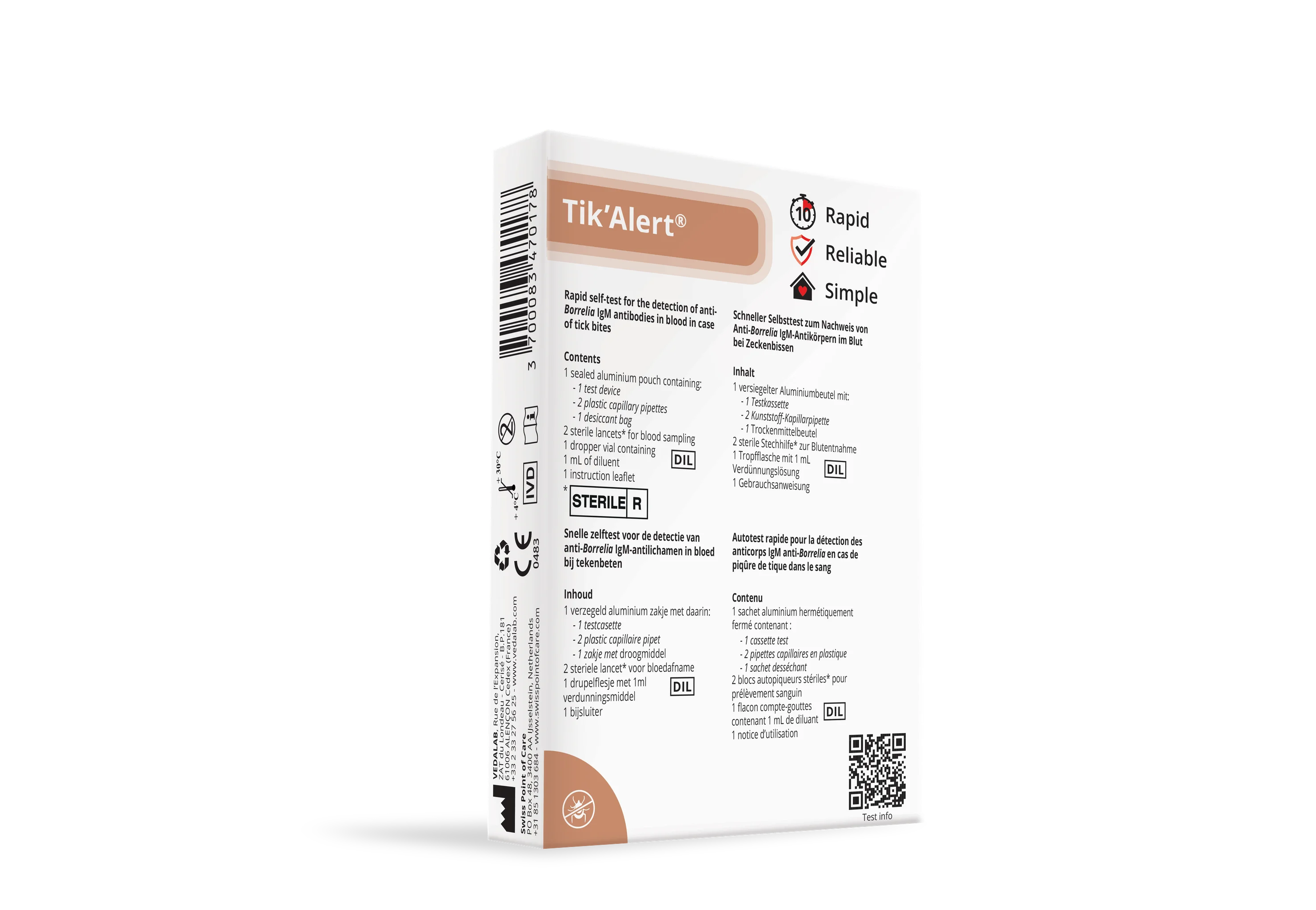
Tik’Alert® Swiss Point of Care

SKU: P-ST-TIK-78
Sale price€14,95

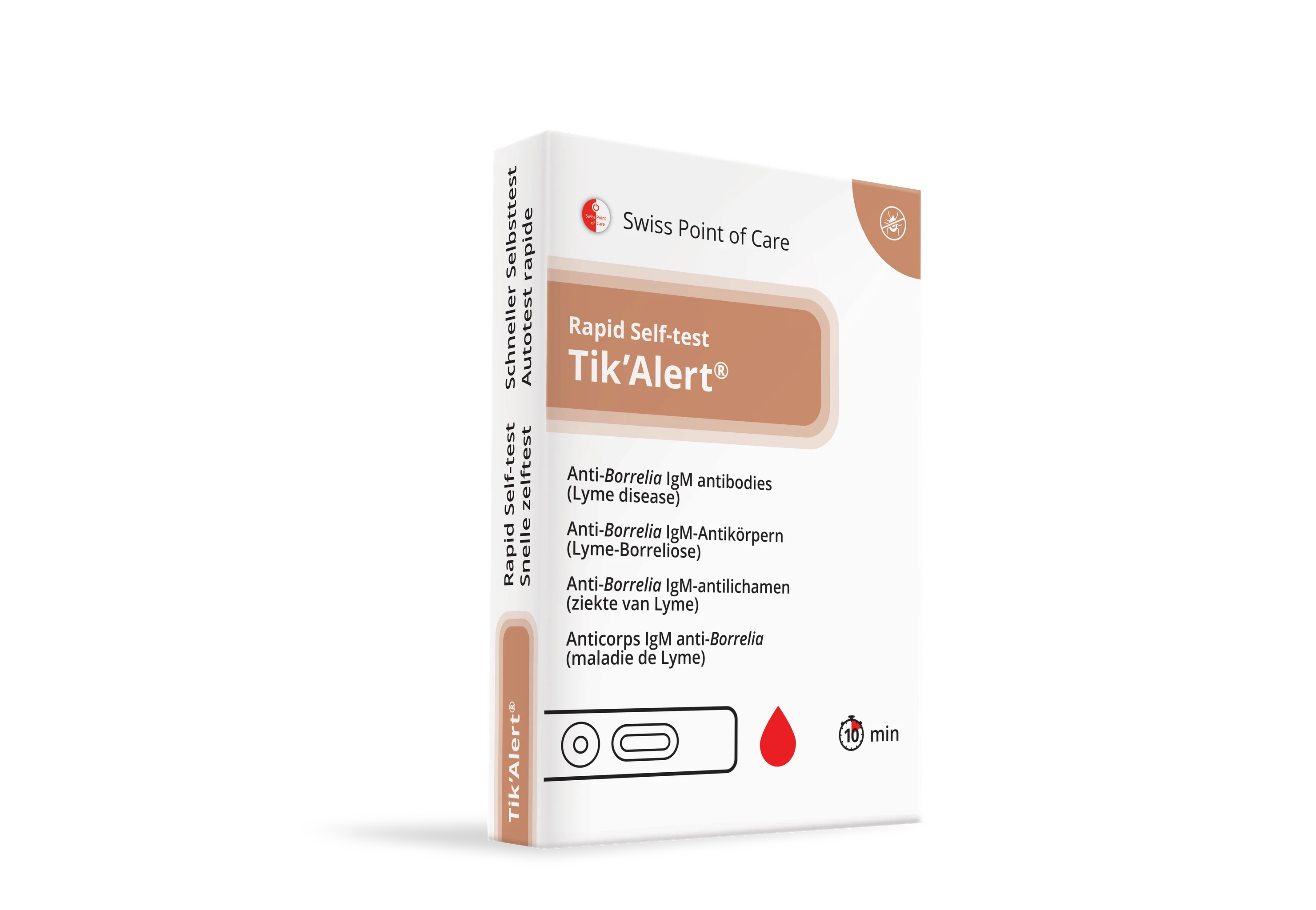
Rapid self-test for the detection of anti borrelia IgM antibodies in blood in case of tick bites. (Lyme disease)

TIK’ALERT® test is a manual qualitative immunochromatographic screening test for the detection of anti-borrelia IgM antibodies in finger prick whole blood sample. It can be used at home by lay users for self-testing for the detection of possible IgM antibodies to Borrelia bacteria further to recent tick bite. This screening test cannot detect the stage of the illness in case of positive results.

  • test for early detection of anti
  • Borrellia IgM antibodies from infected tick bites in blood (Lyme disease)
  • infection

Ready to ship within 24 hours!
Satisfaction guaranteed or your money back

Tik’Alert® Swiss Point of Care

GENERAL POINTS

Ticks are insects living in undergrowth and forests of temperate climatic zones. Those insects can be infected by a bacterium (Borrelia) that can be then transmitted to humans after being bitten on the arm, the leg and any other part of the body not protected with clothes. Borrelia bacterium affects the nervous system and can lead to serious neurological disorders. European strains of Borrelia include B. afzelli, B. garinii, B. burgdoferi sensu stricto B. spielmanii, and B. bavariensis which are known pathogenic. Species B. valaisiana and B. lusitaniae are potentially pathogenic. That infection can also cause cutaneous lesions and arthritis. From 3 to 10 days, or even several weeks, after being bitten, an inflammation and redness (erythema) can appear in the bite region. The inflammation can be accompanied by feverishness. In case of infection, the immune system reacts by releasing specific antibodies directed against Borrelia bacterium. A particular category of antibodies (IgM: immunoglobulins M) which appears first can be detected between 2 and 6 weeks after being infected. Lyme disease develops in 3 stages: In phase I (2 to 4 weeks), The IgM antibodies appear only in 40 to 60 % of the cases. During the phase II (4 to 6 weeks later), the antibodies are detectable in 70 to 90 % of the cases. At last, during phase III, the antibodies are generally present and can be detected.

TIK’ALERT® test is a manual qualitative immunochromatographic screening test for the detection of anti-borrelia IgM antibodies in finger prick whole blood sample. It can be used at home by lay users for self-testing for the detection of possible IgM antibodies to Borrelia bacteria further to recent tick bite. This screening test cannot detect the stage of the illness in case of positive results.

How to use the Tik’Alert® Swiss Point of Care
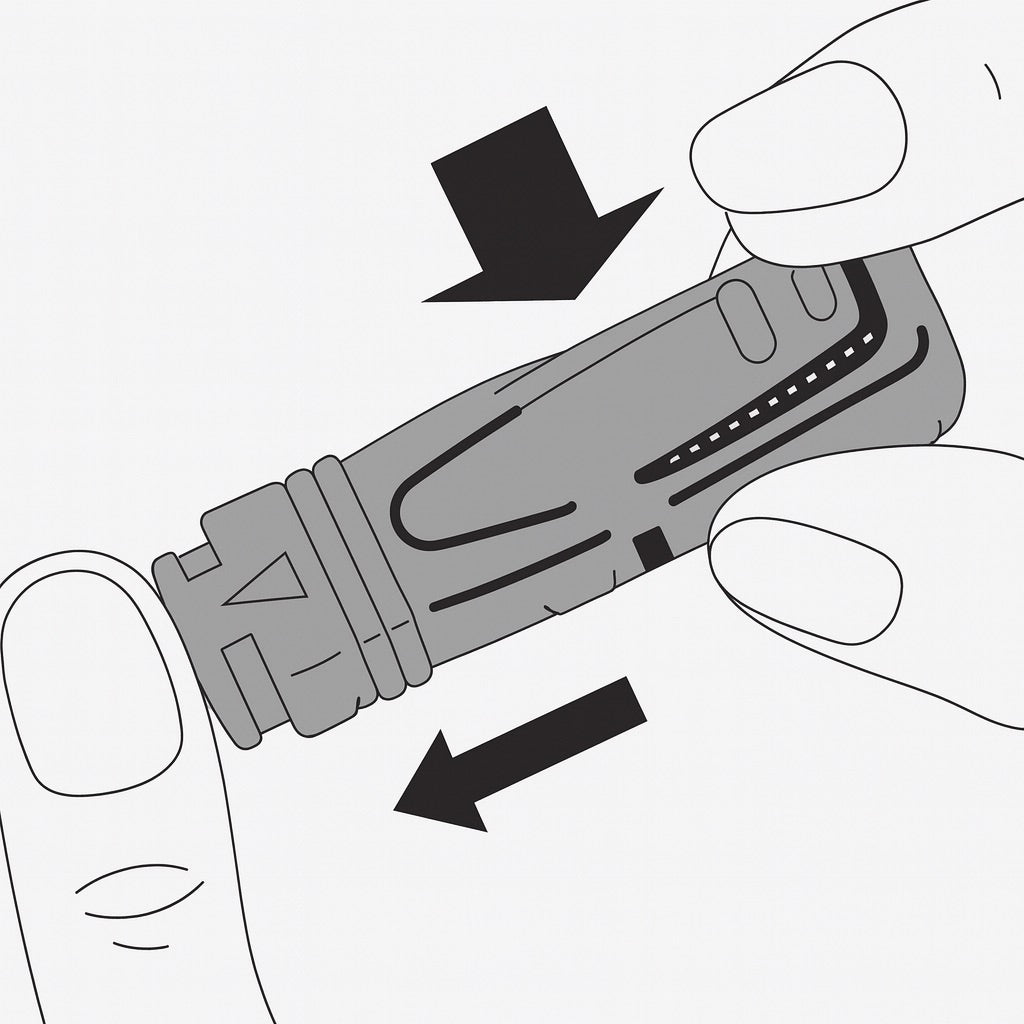
Prepare everything properly before starting the testing procedure. Place the content of the box on a clean, dry and flat surface (e.g. table). Then perform the test as follows:

1. Wash your hands thoroughly. Use soap and warm water. Dry your hand with clean towel.

2. Prepare the test device and capillary pipette: Take them out from the protective pouch (tear at the notch) and place them in the reach of your hands (you will need them later). Discard the desiccant bag.

3. Prepare the lancet. Hold the lancet without touching the trigger button. Unlock the cap twisting it off ¼ turn until you feel it separates from the lancet and then continue twisting it (2-3 rotations). Don’t pull just twist and discard the cap when finished. ①②

4. Clean the end of the middle or ring finger with cotton damped with alcohol. Massage the chosen finger towards the tip for 10 to 15 seconds to enhance the blood flow.

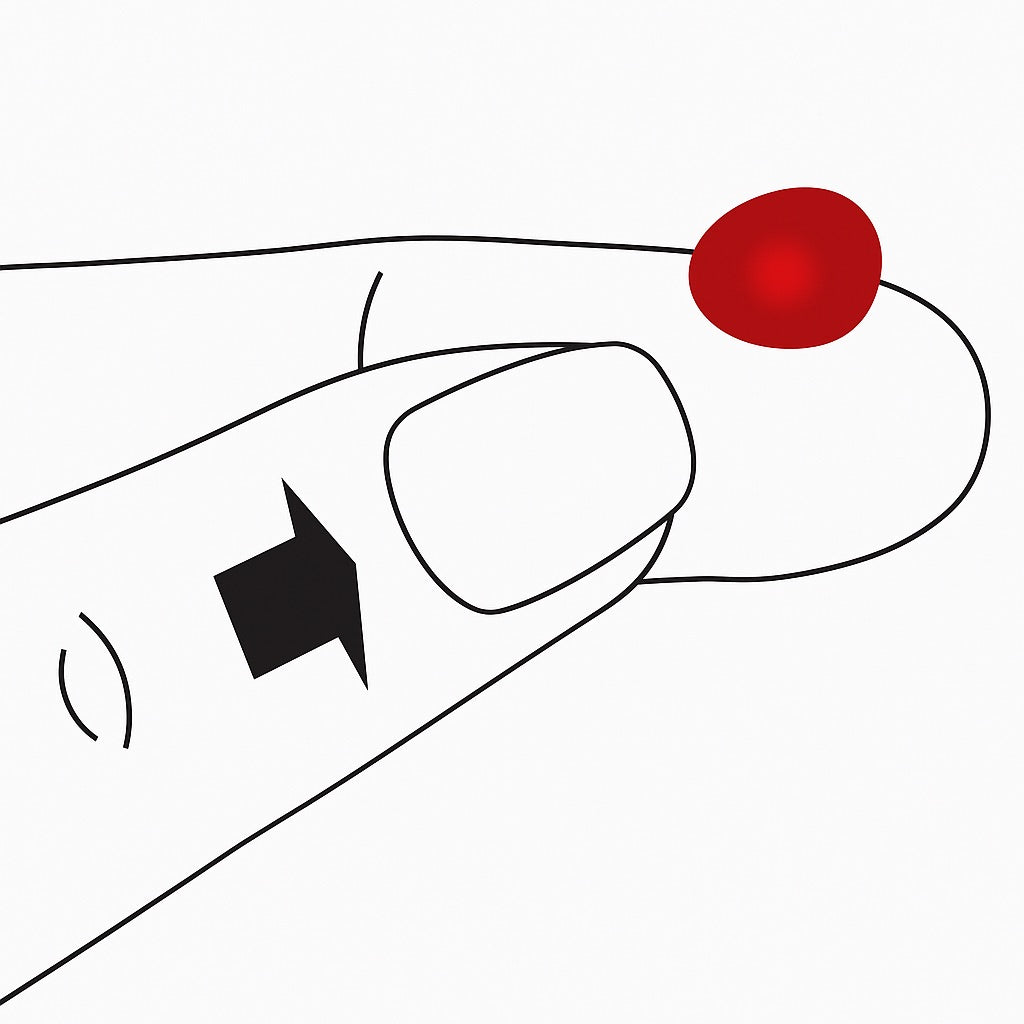
5. Prick the finger: put the lancet firmly against the side of the previously cleaned finger, and press the release trigger button.③ The lancet will automatically retract into the body of the device. Gently massage the finger to create a nice round blood droplet.④

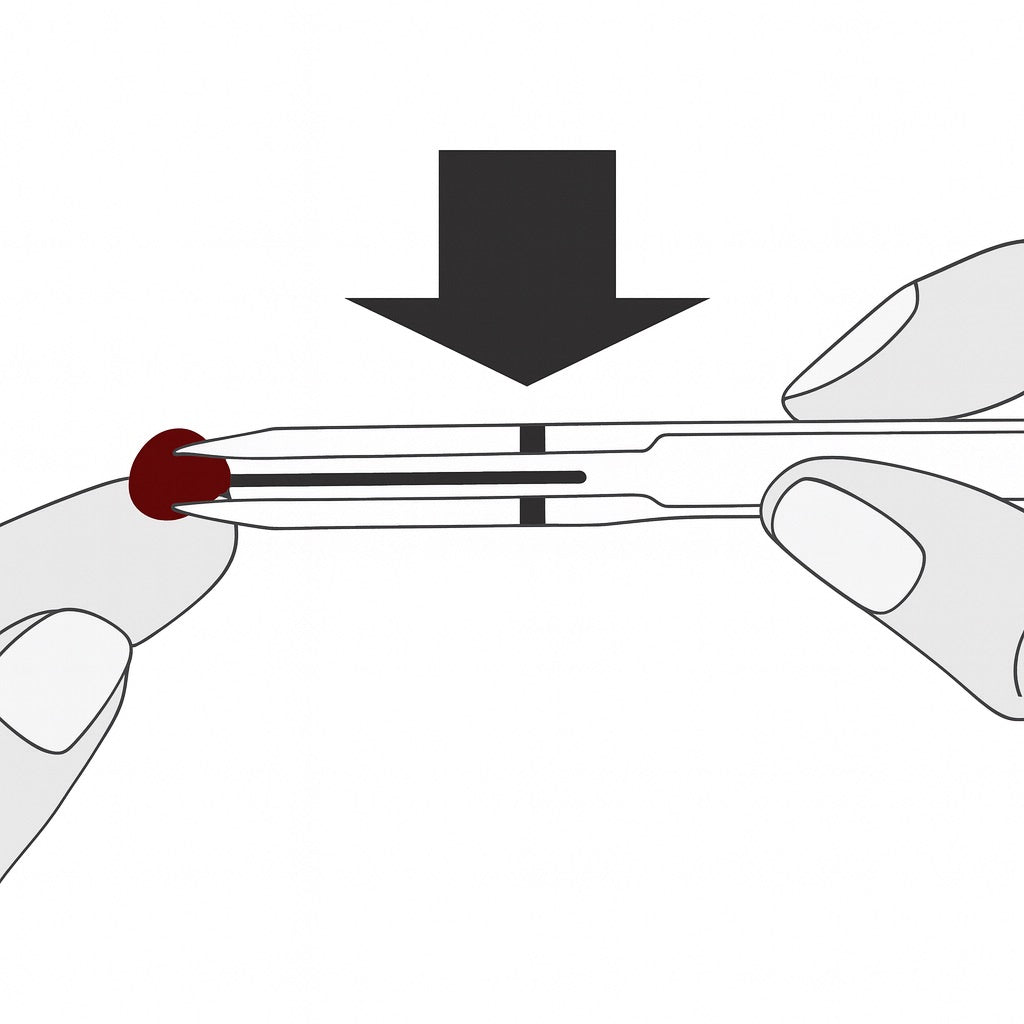
6. Collect the blood with the capillary pipette: Gently touch the blood droplet with the open end of the capillary pipette. It must be filled until the line indicated on the capillary pipette. Do not press the bulb, it fills by itself. Make another blood droplet if the line is not reached. As far as possible, avoid air bubbles. ⑤

7. Put the blood collected with the pipette into the sample well of the device, by pressing on the pipette bulb. ⑥

8. Wait 30-40 sec for the blood being totally absorbed into the sample well.

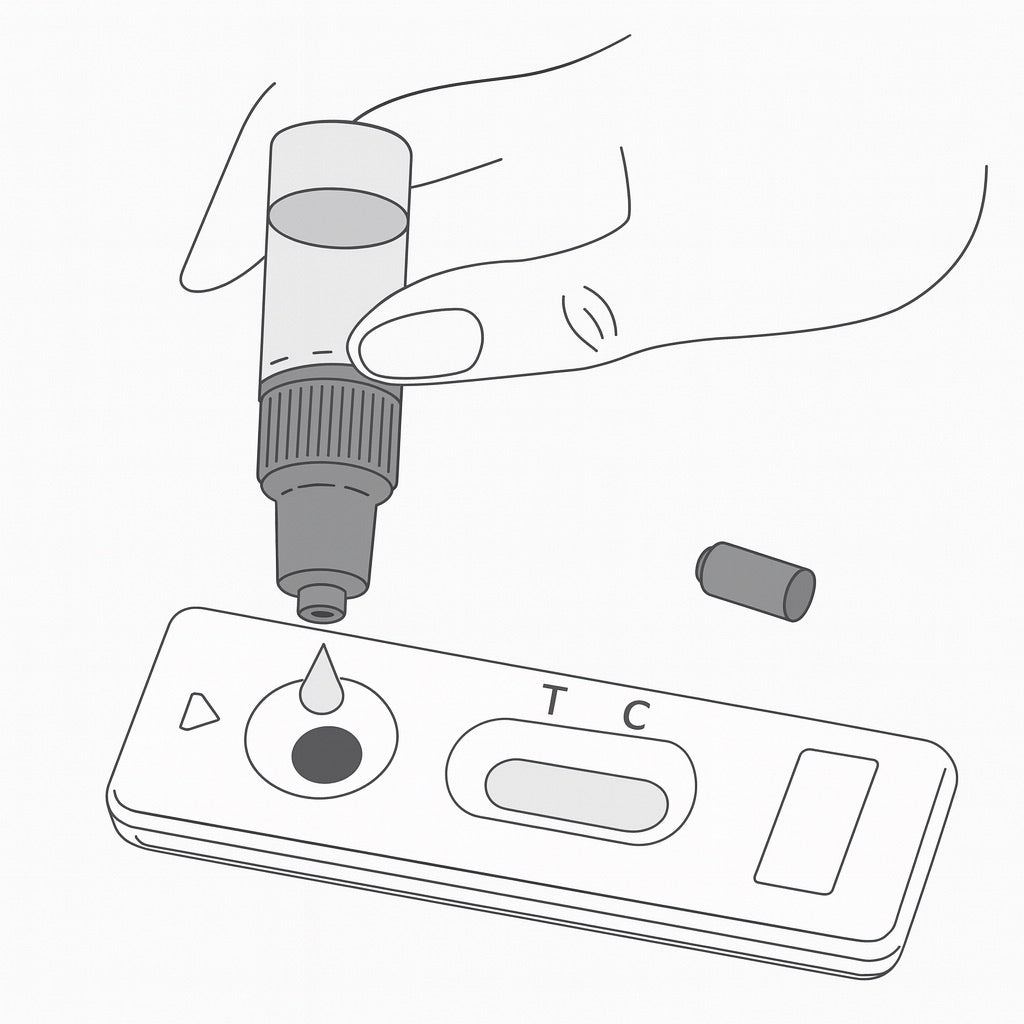
9. Add the diluent: Unscrew the blue cap of the diluent dropper vial (leave the white cap tightly screwed) and add the diluent as follows: Hold the diluent dropper vial vertically and slowly add exactly 4 drops in the sample well of the device with an interval of 2-3 seconds between each drop. ⑦

10. Read the result after 10 minutes. Do not interpret after 15 minutes.

Customer reviews

Our reviews are authentic. Only verified buyers receive an email invitation to review the items they purchased. We reserve the right to remove unlawful review content.